Editorial guide by Love in View · Updated
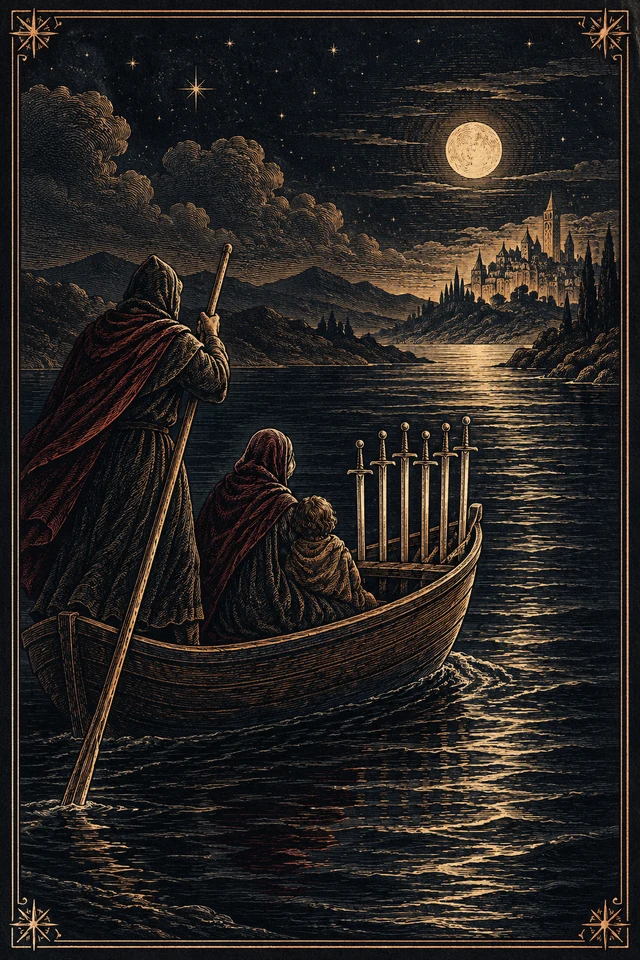
A ferryman poles a small boat toward the far shore; a cloaked woman and child sit low among six upright swords. The water behind is rough, ahead smooth. Waite called it route and expedient — passage. In love it is the transition card: leaving a hard chapter, a hard pattern, or a hard person, gradually and for good.
Six of Swords upright in love: the crossing has begun
Upright, you are already further along than it feels. A couple drawing this card is typically moving out of a stormy season into calmer habits — fewer eruptions, more logistics, the slow unclenching after repair. For someone single or freshly separated, it marks genuine motion: new city, new rhythm, mornings that hurt less. The boat is slow on purpose; swords travel with you because lessons should. Grief may ride along quietly. You are not failing the crossing by crying in the boat.
Six of Swords reversed in love: the boat keeps circling back
Reversed, the departure keeps not completing. You announce the move on, then reread old messages at midnight; the couple agrees to change, then drifts back to the same shoreline fight. Sometimes the block is practical — finances, leases, shared friends — but more often one passenger is secretly rowing backward. After a breakup, this reversal names the loop of almost-over. The card's counsel is unglamorous: stop re-boarding. Unfinished business finishes only when someone refuses to reopen it.
As their feelings: halfway between shores
As their feelings, the card describes someone mid-transition about you. Upright, they are processing their way toward steadier ground — past the worst of an old hurt, cautiously ready for quieter connection, though not yet fluent in saying so. Expect subdued warmth rather than fireworks; stability is the romance here. Reversed, part of them is still docked at a previous chapter — an ex, a grievance, an old version of you — and they cannot fully arrive until that mooring is cut. Patience helps; towing them does not.
Questions you might have
Does the Six of Swords mean we should move on from each other?
Not automatically. It can mean moving on together — out of a bad pattern into a calmer one — just as often as moving apart. The card commits to transition, not to direction. What it rules out is staying anchored in the storm.
Will things get better after the Six of Swords?
The imagery leans that way: rough water behind, smooth ahead, a crossing already underway. Readers frame it as earned improvement — calmer days arriving because something was finally left, changed, or forgiven. The swords in the boat mean you keep the lesson.
Six quick selections. No writing required. A free first result, with an optional paid fuller report.
Free & in-depthShould I contact my ex? Three checks before you send.
Reflection prompts with a fictional example — not a customer testimonial.