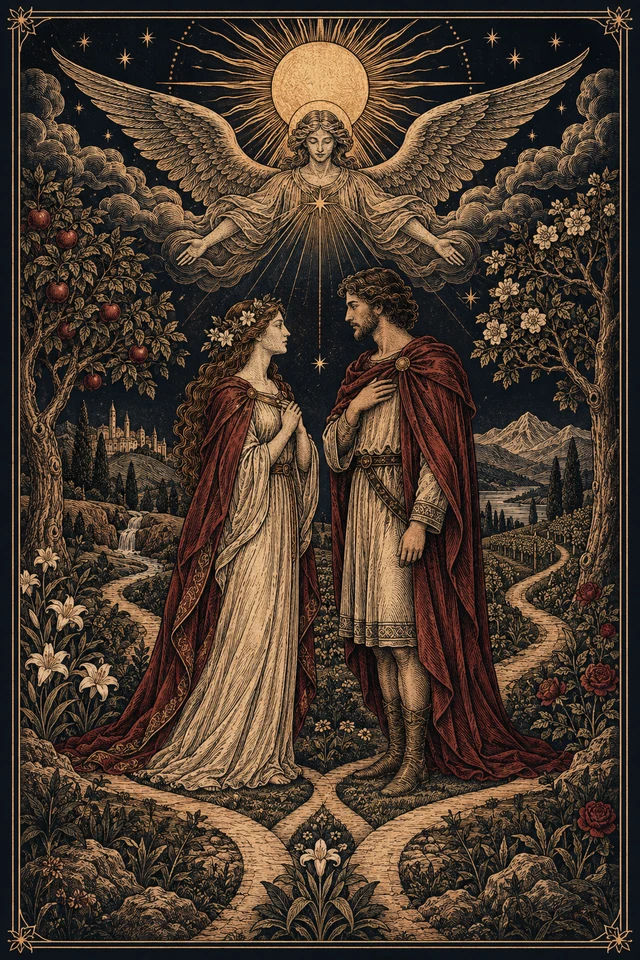
Editorial guide by Love in View · Updated
Twenty-two cards, twenty-two ways a love question can be organized. The Major Arcana are the oldest, most recognizable images in a tarot deck — The Fool stepping toward the cliff's edge, The Empress among her wheat, The Tower struck by lightning — and each carries centuries of meaning around one human situation. This series takes them one at a time and asks a narrow question: what does this card tend to say when the question is about love? Each page reads the card the way a love reading does: upright, reversed, and as their feelings — the answer a reader actually came for.
How to use these card pages when the question is love
Start with the card you actually pulled, in the position it actually appeared in — reading three pages at once is how a reading turns into fog. Take the orientation seriously: upright and reversed are different conversations, and blending them produces noise rather than nuance. When the position is feelings, read that section as the answer you came for: what they feel about you, named plainly, upright and reversed. These pages are built to slow you down, not to issue a score. Drawing The Lovers does not grade your bond, and drawing The Tower does not condemn it. If a sentence stings, treat the sting as data — something recognized, something feared, something wanted — and carry it back to the week you are actually living.
The 22 Major Arcana and their core love themes
One line each, unpacked on the card's own page. The Fool — beginnings without guarantees. The Magician — personal agency. The High Priestess — the detail you already know. The Empress — care that nourishes. The Emperor — structure and clarity. The Hierophant — shared definitions. The Lovers — choice. The Chariot — direction. Strength — softness with boundaries. The Hermit — solitude that restores. Wheel of Fortune — changing rhythms. Justice — counting actions. The Hanged One — waiting as a decision. Death — endings before feelings end. Temperance — balance and small moves. The Devil — loops that feed on relief. The Tower — truth that breaks a story. The Star — hope that breathes. The Moon — unclear versus hidden. The Sun — ordinary healthy warmth. Judgement — the call you live by. The World — completion from your side. If you are new here, begin with the card that showed up in your reading rather than the one that sounds prettiest; the page you need is usually the page you pulled.
How readers use the feelings position
Tarot readers put a card in 'their feelings' when the question is what the other person feels for you. That is the section these pages write in the market's default voice: specific, warm, and aimed at the heart that asked. Upright and reversed are two climates of the same card, not a moral ranking. A free three-card reading on this site still uses three lenses — the atmosphere, the knot, the door — and the same card does different work in each. If you arrived through one of the questions above — 'They went quiet', 'Hot, then cold', 'An ending that still echoes', 'We never named it' — open the page for the card you pulled and read the feelings section as the reply. Then decide with your own days in hand. The deciding stays yours after the card is put away.
Questions you might have
Can tarot cards tell me what my partner is feeling?
When a card lands in the feelings position, these pages answer the way tarot readers do: this is what they feel about you, upright and reversed. Use it as the reply you came for — specific, warm, and meant for the heart that asked. Then watch whether their days match it. A spread organizes the weather of a bond; your eyes still do the living with it.
Which card meaning page should I read first?
The one matching the card you actually pulled — relevance beats curiosity. If you have not drawn yet, pick the page nearest your situation: The Fool for beginnings, The Moon for fog, The World for a chapter you are trying to close. And if you use the free three-card reading, notice the position: the same card does different work in the atmosphere, in the knot, and at the door.
Six quick selections. No writing required. A free first result, with an optional paid fuller report.
Free & in-depthShould I contact my ex? Three checks before you send.
Reflection prompts with a fictional example — not a customer testimonial.
Public link to this guide: https://loveinview.com/en/topics/tarot-card-meanings-in-love