Editorial guide by Love in View · Updated
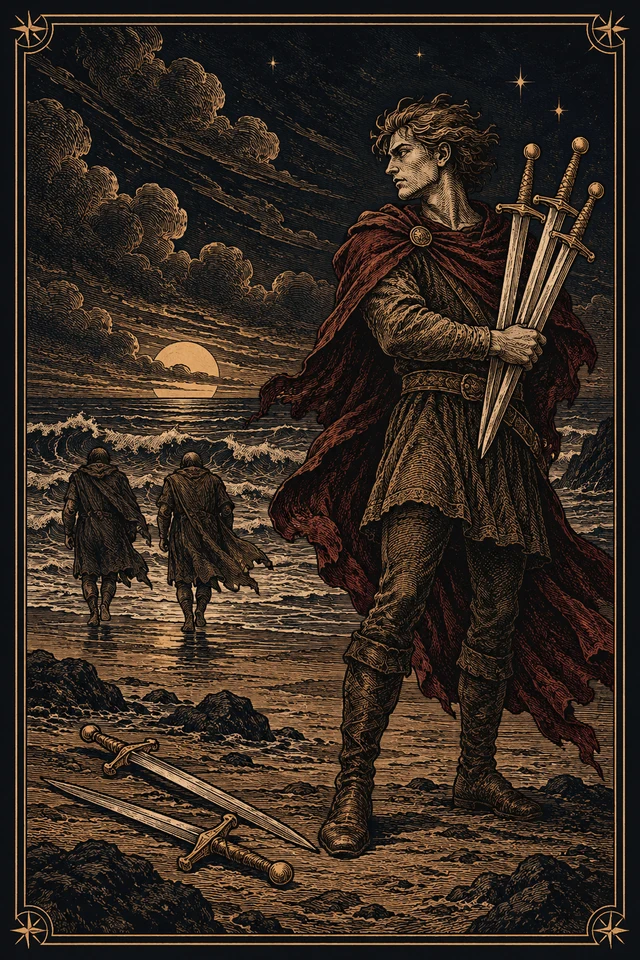
A smirking figure gathers swords while two others walk away, shoulders down, their weapons left in the dirt. Waite's keywords are defeat and dishonour, and in love that lands precisely: the argument someone won and the relationship lost. Drawn on a couple question, it asks who is collecting blades — and what the collection is costing.
Five of Swords upright in love: the victory nobody enjoys
Upright, this card catches conflict that has stopped being about the issue and started being about winning. Someone needs the last word; someone keeps score; apologies arrive with footnotes. Single, it can mark dating that feels like fencing — tests, jabs, tiny humiliations dressed as banter. The card's question is surgical: would you rather be right or be close? You can usually have one at a time, and this scene shows what choosing right on every round eventually leaves on the field.
Five of Swords reversed in love: putting the blades down
Reversed, two stories are possible and honesty picks between them. The kinder one: the war is ending — someone extends a real apology, old grievances get released, and both sides stop litigating the past. The harder one: the conflict has simply gone underground, resentment cooling into contempt behind polite faces. After a breakup, this reversal often marks the moment you stop re-arguing it in your head. Release that is real feels lighter within days; a ceasefire that is only tactical feels exactly as heavy as before.
As their feelings: pride is standing where tenderness was
As their feelings, expect armour and arithmetic. Upright, they may still care underneath, but right now they are guarding wounded pride — replaying the fight, rehearsing comebacks, framing you as an opponent. Affection shows up sideways as competitiveness or cold courtesy. Reversed, exhaustion with the battle is growing, and some part of them wants to hand the swords back and just talk. The opening, when it comes, will be awkward and small. Whether it survives depends on nobody using it to win.
Questions you might have
Does the Five of Swords mean the relationship is over?
Not by itself. It diagnoses a pattern — conflict as combat — rather than issuing a verdict. Couples do walk back from it, usually when someone disarms first. It reads as terminal mainly when both people would still rather win than repair.
What does the Five of Swords say about an ex who hurt me?
It often validates that the ending was a battlefield: pride, humiliation, uneven blame. Readers tend to pull one practical thread from it — do not re-enter negotiations just to retake the field. Walking away from the swords counts as strength here, not defeat.
Six quick selections. No writing required. A free first result, with an optional paid fuller report.
Free & in-depthShould I contact my ex? Three checks before you send.
Reflection prompts with a fictional example — not a customer testimonial.